For beginners
Dressing Preppy: A Step-by-Step Guide for Beginners
Dressing preppy starts with clean, comfortable basics and a few classic layers. Learn a simple process for choosing colors, proportions, shoes, and accessories.
This guide contains Amazon affiliate links. If you buy through them I may earn a commission at no extra cost to you. The links point to search results for similar items, not to specific products I have tested. Read my full disclosure.

Look 01 / 10
Shop the look
The easiest start
I chose this to open the guide because it is the simplest preppy outfit there is. I love that a Breton sweater, a collar peeking out, and khakis are all a beginner needs.
- 1Breton stripe sweaterNavy and creamShop
- 2Light blue oxfordCollar outShop
- 3Khaki chinosStraightShop
- 4Brown leather beltCasualShop
- 5Leather messenger bagBrownShop
Links open Amazon search results for similar items.
Dressing preppy means wearing clean, comfortable basics with a few classic layers: a collared shirt, a knit or blazer, chinos or a skirt, and loafers or white sneakers, in navy, white, cream, and khaki. You can start this week with clothes you probably already own.
This is a beginner's guide, written as a process. Each section is one step: understand the basics, audit your closet, choose a few first pieces, pick a palette, learn three outfit formulas, avoid common mistakes, adapt for work, school, and weekends, explore on a budget, and follow a simple first-week plan. I hand-picked every example because I love it. Once you are comfortable, my preppy look guide goes deeper into styling details.
What does dressing preppy involve?
Dressing preppy involves three habits: wearing a collar or classic neckline, adding one neat layer such as a sweater or blazer, and keeping colors calm and coordinated. Neat fit and leather or clean white shoes finish the look.
A simple definition and visual cues
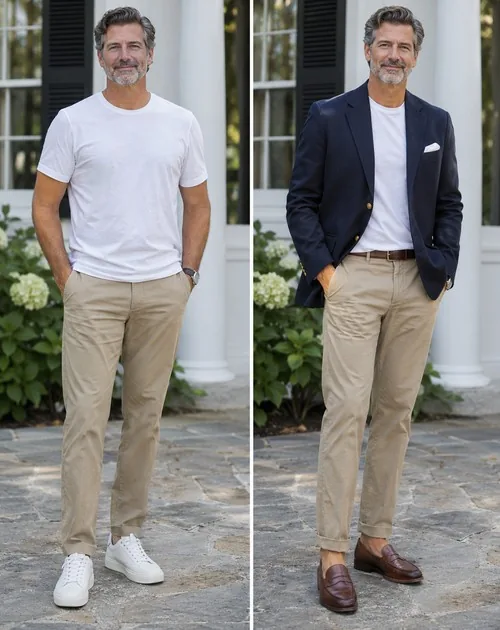
The before-and-after below says it best. On the left, a white tee and khaki chinos with sneakers: neat, but not preppy. On the right, the same tee and chinos with a navy blazer, pocket square, and brown loafers: instantly preppy.
- Visual cues: collars, cable knits, stripes, navy blazers, khakis, loafers.
- Colors: navy, white, cream, light blue, khaki, brown leather.
- Fit: neat and comfortable, not tight or baggy.
Direct answer first, background later
You do not need to know the history to start. If you are curious, my complete preppy fashion guide covers where the style came from. For now, focus on the three habits above.
Look 02 / 10
Shop the look
One layer makes it preppy
I love this before-and-after because it shows how little it takes. A white tee and chinos are just casual; add a navy blazer and loafers and the same outfit becomes preppy.
- 1White crew teeHeavy cottonShop
- 2Khaki chinosSlim straightShop
- 3White sneakersLeatherShop
- 4Navy blazerUnstructuredShop
- 5Brown loafersPennyShop
Links open Amazon search results for similar items.
How do you start with your own closet?
Sort your clothes into three piles: keep (already preppy-friendly), style (could work with the right layer), and let go (does not fit or does not suit). Then list the one or two gaps that would connect the most outfits.
Keep, style, and identify gaps
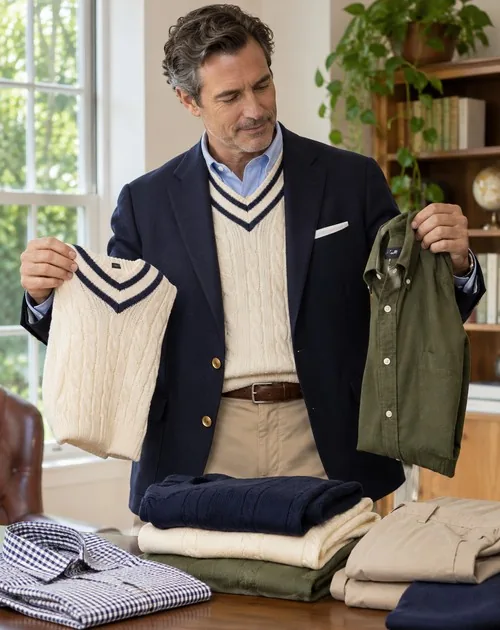
The photo below shows an audit in progress: holding up each piece and deciding whether it fits the palette and works with the rest.
Audit checklist
- Collared shirts (oxford, striped, gingham, polo)
- Knits (crewneck, cable, cardigan, vest)
- Layers (blazer, light jacket)
- Bottoms (chinos, straight jeans, skirts, tailored trousers)
- Shoes (loafers, white sneakers, flats)
- Accessories (brown belt, simple watch, tote or leather bag)
Anything in navy, white, cream, light blue, khaki, or stripes probably goes in the keep pile.
Look 03 / 10
Shop the look
Audit your closet
I love this because it is exactly what a closet audit looks like. Hold each piece up, ask if it fits your palette, and keep only what works with the rest.
- 1Navy blazerPocket squareShop
- 2Cricket sweaterCream with navyShop
- 3Olive shirtButton-downShop
- 4Gingham shirtBlue checkShop
Links open Amazon search results for similar items.
What are the first versatile pieces?
If you are missing anything, start with an oxford shirt, a navy or cream knit, khaki chinos, and brown loafers or white sneakers. A navy blazer is the next most useful piece. Buy only what you are actually missing.
Shirt, knit, bottom, and shoe options
| Slot | First choice | Alternatives |
|---|---|---|
| Shirt | Light blue or white oxford | Striped shirt, polo |
| Knit | Navy crewneck or cream cable | Cardigan, sweater vest |
| Bottom | Khaki chinos | Straight jeans, pleated skirt |
| Shoe | Brown loafers | White sneakers, ballet flats |
| Layer | Navy blazer | Light jacket, cardigan |
Nothing is mandatory
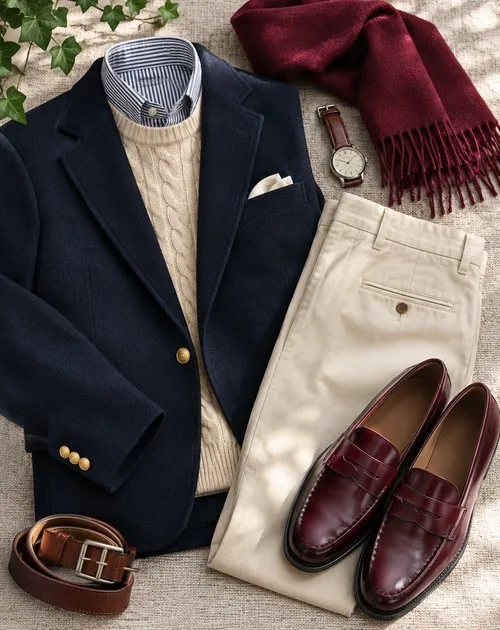
You do not have to buy every item in the flat lay below. If you already have something similar, use it. If loafers are uncomfortable for you, sneakers are just as valid. Dressing preppy should fit your life, not a shopping list.
Look 04 / 10
Shop the pieces
Your first pieces
I love this flat lay as a starter kit. Each item is versatile on its own, and together they make a complete preppy outfit you can wear many different ways.
- 1Navy blazerGold buttonsShop
- 2Striped oxford shirtBlueShop
- 3Cream cable sweaterCrewneckShop
- 4Khaki chinosStraightShop
- 5Burgundy penny loafersLeatherShop
- 6Brown leather beltBrass buckleShop
- 7Leather strap watchClassicShop
- 8Burgundy scarfWoolShop
Links open Amazon search results for similar items.
How do you choose a color palette?
Pick two base colors, such as navy and light blue, plus khaki or cream as a neutral. Add one accent later, like burgundy or forest green. Every piece you wear or buy should fit inside this palette.
Two base colors and accents
The close-up below shows the easiest beginner palette: a light blue oxford with a navy cable sweater over the shoulders. Navy and light blue go with each other, with khaki and cream, and with every shade of brown leather.
Wearable examples
- Light blue shirt + navy sweater + khaki chinos.
- White shirt + navy blazer + cream trousers.
- Navy and cream stripe + khaki chinos + brown loafers.
- Later: add a burgundy sweater or a forest green cardigan as an accent.

Look 05 / 10
Shop the look
Start with two colors
I love how simple this palette is. Light blue and navy are the easiest two colors to start with: they go with each other, with khaki, and with every shade of brown leather.
Links open Amazon search results for similar items.
How do you combine pieces into outfits?
Start with three beginner formulas: (1) oxford + crewneck + chinos + loafers, (2) striped top + blazer + jeans + loafers, (3) polo or tee + chinos + white sneakers. Swap one piece at a time to create more.
Three beginner formulas
| Formula | Pieces | Good for |
|---|---|---|
| 1. The classic | Oxford + crewneck + chinos + loafers | Class, office, dinner |
| 2. Smart casual | Striped top + blazer + jeans + loafers | Weekends, travel, brunch |
| 3. Easy casual | Polo or tee + chinos + white sneakers | Errands, warm days |
Fit and proportion
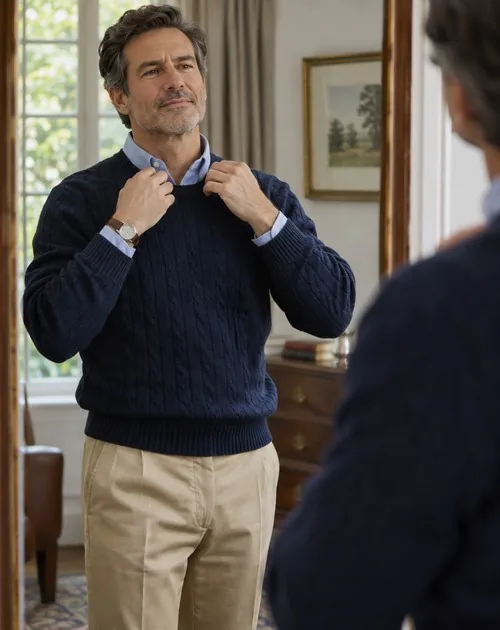
Pull the collar out over the sweater, let cuffs show a little at the wrist, and choose trousers that fall cleanly to your shoes. The mirror check below shows formula one done well: an oxford under a navy cable sweater with straight chinos.
Look 06 / 10
Shop the look
Formula one
This is the first formula I would teach anyone. I love that an oxford under a navy cable sweater with chinos looks right in almost every situation.
- 1Navy cable sweaterCrewneckShop
- 2Light blue oxfordCollar outShop
- 3Khaki chinosStraightShop
- 4Leather strap watchSilver or goldShop
Links open Amazon search results for similar items.
How do you avoid common styling mistakes?
The most common beginner mistakes are overmatching, choosing discomfort, and impulse buying. Keep outfits to two or three colors without matching everything exactly, wear only what you can move in, and buy only pieces that work with at least three things you own.
Overmatching, discomfort, and impulse buys
- Overmatching: head-to-toe navy or perfectly matching stripes can look like a uniform. Mix navy with cream or khaki.
- Discomfort: a too-tight blazer or painful loafers will make you stop wearing them. Choose comfort.
- Impulse buys: a bright, novelty piece rarely fits a beginner wardrobe. Wait a few days before buying.
- Too many patterns: one pattern per outfit is plenty at first.
Practical, not prescriptive
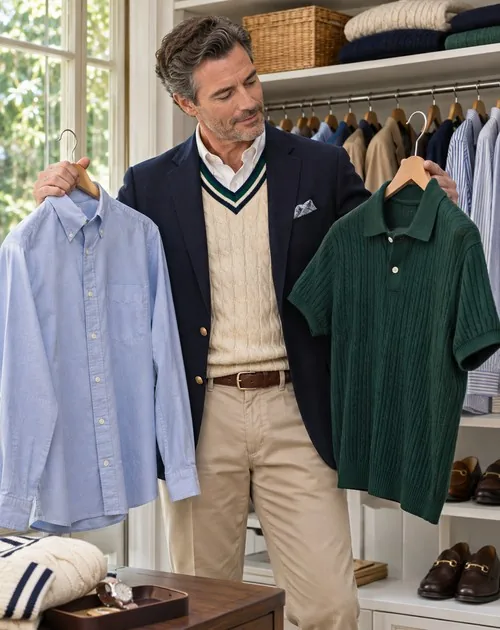
These are guidelines, not rules. If something makes you happy and feels like you, wear it. The photo below shows the right habit: holding up two options and asking which one fits your wardrobe better.
Look 07 / 10
Shop the look
Choose, do not collect
I love this moment of choosing. The blue shirt works with everything he is wearing, the green polo adds a new accent. Asking that question before buying is how you avoid mistakes.
- 1Light blue oxfordButton-downShop
- 2Cricket sweaterCream V-neckShop
- 3Green knit poloShort sleeveShop
- 4Navy blazerPocket squareShop
- 5Khaki chinosStraightShop
Links open Amazon search results for similar items.
How do you adapt the style to work, school, and weekends?
Keep the same base and change the layer and accessories: add a blazer and leather belt for work, a cardigan and practical bag for school, and swap to sneakers and a canvas tote for weekends.
Occasion guide
| Setting | Add or swap |
|---|---|
| Work | Blazer, leather belt, loafers, structured bag |
| School or campus | Cardigan or crewneck, backpack or tote, sneakers or loafers |
| Weekends | Striped top or polo, jeans, white sneakers, canvas tote |
Respect local dress codes
Schools and workplaces have their own rules. Follow them first, then add preppy touches where you can: a collar under a uniform sweater, a classic belt, or loafers. For more, see my preppy attire guide.
Look 08 / 10
Shop the look
Adapting to the occasion
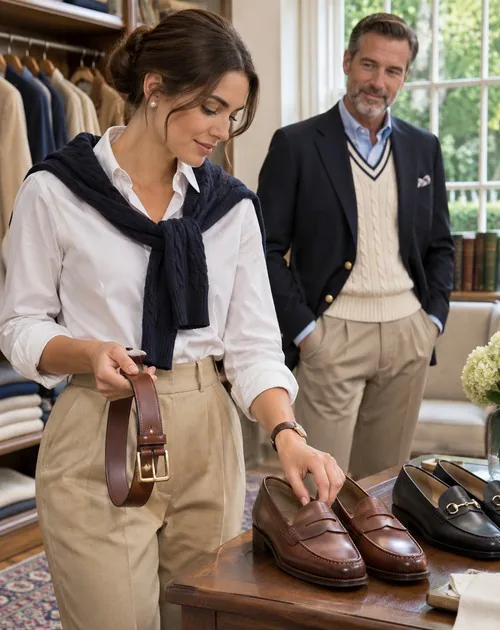
I love this scene because it shows how accessories adapt an outfit. A brown belt and loafers make her shirt and khakis work-ready, while his blazer and cricket vest suit a smart weekend.
- 1White button-up shirtRelaxedShop
- 2Navy sweaterOver the shouldersShop
- 3Khaki trousersWide legShop
- 4Brown leather beltGold buckleShop
- 5Brown penny loafersLeatherShop
- 6Men's navy blazerPocket squareShop
- 7Men's cricket vestCreamShop
Links open Amazon search results for similar items.
How can you explore the style on a budget?
Thrift classic pieces, swap clothes with friends, and tailor what you find. Blazers, tweed jackets, knits, oxford shirts, and chinos are common secondhand, and small alterations make them fit like new.
Thrifting, tailoring, and swaps
- Thrifting: look for navy blazers, tweed jackets, cable knits, and oxfords.
- Tailoring: shorten sleeves and hem trousers; avoid pieces that need shoulder changes.
- Swaps: trade with friends or join community clothing swaps.
Quality checks
Like the shopper below, look inside before you buy: check the lining, seams, buttons, and underarms. Knits should not have large holes; leather shoes should have solid soles and no deep cracks. A good secondhand piece can last for years.

Look 09 / 10
Shop the look
Thrift with care
I love thrifting for preppy pieces, and this photo shows the most important habit: checking the lining and seams before you buy. Tweed jackets like this are some of the best secondhand finds.
- 1Navy blazerWoolShop
- 2Cricket sweaterCreamShop
- 3Brown tweed jacketHerringboneShop
- 4Light blue shirtOxfordShop
Links open Amazon search results for similar items.
What is a simple first-week plan?
Wear one preppy formula each day for five days, using mostly pieces you already own. Repeat pieces freely, note what feels good, and adjust. By the end of the week you will know your favorite formula.
Outfit planner and checklist
| Day | Outfit |
|---|---|
| Day 1 | Oxford + navy crewneck + chinos + loafers |
| Day 2 | Striped top + blazer + jeans + loafers |
| Day 3 | Polo or tee + chinos + white sneakers |
| Day 4 | Oxford + blazer + chinos + sweater over the shoulders |
| Day 5 | Your favorite from days 1 to 4, with one new swap |
- I wore a collar or classic neckline each day.
- I kept to my two or three colors.
- I felt comfortable all day.
- I noted which outfit felt most like me.
Rewearing your favorite outfit is not a failure; it is how you find your style.
Rewear and personal preference
Wearing the same pieces again and again is exactly how preppy wardrobes work. Choose the formula you liked most and make it your default. The outfit below, a navy blazer with a cream sweater over the shoulders, is a great day-four or day-five option once you feel more confident.

Look 10 / 10
Shop the look
End of week one
I picked this to finish because it is where a first week of dressing preppy can lead. I love how the cream sweater over the navy blazer adds a confident, personal touch to simple pieces.
- 1Navy blazerGold buttonsShop
- 2Cream sweaterOver the shouldersShop
- 3Light blue shirtOxfordShop
- 4Khaki chinosStraightShop
- 5Brown leather beltClassicShop
Links open Amazon search results for similar items.
Your next step
Do the closet audit today and plan day one of your first week. Lay out the outfit tonight, including shoes and belt, and wear it tomorrow. Small, steady steps are the fastest way to dressing preppy with confidence.
Comments
Which look is your favorite? Tell me below. Comments are reviewed before they appear.